April 28, 2010

Math lesson from Upper Egypt: bike > mini-bus > train...

Well, my semester at AUC is officially in the home-stretch: I have less than 4 weeks left. But although I'm ecstatic to be nearing the finish, the last few weeks will be anything but a breeze. I have a crap-load of work left, including two 3,500 papers due in one week, plus a big ol' research paper for my favorite class- Women, Islam and the State. Yee-haw.

Despite these imminent deadlines, I couldn't resist taking advantage of the 5 day weekend afforded to us. In reality, we only had one day off, a Sunday, but since we also get classes off every Tuesday, nearly everyone simply skipped classes on Monday in order to create a nice, little break.

With my time, I decided to travel down to Upper Egypt and feast my eyes on the Pharaonic wonders of Aswan, Luxor and Abu Simbel. So on Thursday night, I headed to the Cairo's Ramsees Train Station in order to catch a south bound train.

Ben had actually purchased our tickets a few days earlier, so we didn't need to worry about that. We had planned on traveling in the uber-cheap second class carriage, but Ben was informed that foreigners had to purchase first class tickets. We'd paid 330 Egyptian pounds a piece for a round-trip, well more than I thought was justifiable, but I took solace in the fact that at least we would be riding in the lap of luxury. Or so I thought.

Simply put, the train was unfit for human beings to ride on. Well, I suppose that was a bit of a stretch, but it really wouldn't surprise me if it doubled as a camel freighter. It was smelly, dank, itchy and just plain-old gross. Our compartment didn't have a door, so the sounds of babies screaming and Egyptians jamming to music from their cellphones was a common theme throughout the 13 hour ride that began at 11:15 pm. Mumtaz!

We arrived in Aswan, Egypt just before noon, and set off locating our hotel. Despite its size (1 million) Aswan seemed incredibly chill and relaxing. Lazily meandering down the Nile (which is infinitely more pristine and clean at this point than it is a couple thousand miles down stream in Cairo) is the attraction of choice for many tourists who visit. The souq area of the town was also refreshingly muted in comparison to the madness of Khan al-Khalilee.

After checking into the Hathor Hotel, we grabbed some lunch and then caught a one pound fairy to Elephantine Island, a truly remarkable place. Here, a Nubian community operates as it has for hundreds of years (with some modern technological infusions, of course). There weren't really any "must-see" destinations per say, but I vastly enjoyed aimlessly ambling through the thick jungle fauna and navigating through packs of goats and chickens. It was a lovely slice of nature that isn't obtainable within the city limit of Cairo.

After Elephantine Island, we negotiated our way to Kitchner Island, via a private boat (we probably could've swam...it was about 100 yards away). This island is apparently supposed to house an impressive botanical garden, but it was fairly disappointing: it seemed to be more or less a sort of private park. Well the site itself wasn't spellbinding, we occupied ourselves for well over half an hour by entertaining a throng of young Egyptian school children who were simply fascinated with us. It was a great opportunity to practice Arabic and also to help disseminate the greatest game on earth, American football, which the kids seemed interested in learning.

We returned to the mainland in the early evening, and looked around for a little while. Aswan wasn't overflowing with tourist attractions like some other destinations we'd visited in the past months, but perhaps that's what made it so appealing. It had a very down-to-earth type feel to it that I couldn't help but appreciate.

We ate an early dinner and were in bed by 9 pm. We were headed to Abu Simbel the next morning, and our minibus would be departing at 3:30 am. Getting to Abu Simbel is a bit cumbersome due to the fact that you have to travel in a military convoy, thanks to a nasty streak of terrorism targeting tourists in the 1990's. But after waking up the next morning and hoping in our transportation, I hardly noticed as I slept the entire way.

After the Pyramids, Abu Simbel is one of Egypt's greatest attractions, and rightfully so. Everyone seems to know Abu Simbel as "the place with those four giant statues," but I found the intricate and still vividly colored artwork on the inside to be just as compelling. However, the fact that photography within the temple is barred is probably the reason why the artwork inside isn't as well known, and sure enough, the picture I'm posting to the right is indeed of the instantly recognizable gigantic statues of Ramsees II, all identical.

We poked around the various temples for a bit and checked out Lake Nasser, which claims to be the largest man-made body of water in the world, extending all the way into Sudan (which quite possibly we saw...it's only 40 miles from Abu Simbel). After our 45 minutes of fun was up, we were back in the minibus and on to the next destination of the day: The Aswan High Dam.

For whatever reason, I was expecting the Aswan High Dam to be a modern marvel of engineering on the same scale as the Hoover Dam. Boy was it anything but. It was extremely boring. Really, all we could see was just a road going across a structure with a pile of rocks on either side. And it wasn't even that high!

We continued with the sightseeing affair and were shuttled next to the Temple of Philae, or, to be more precise, the place where one takes boats to the Temple of Philae. The temple itself is located on an island amidst the Nile, though not on the original island it was constructed. It was actually relocated in the 1960's, in an effort to rescue it from rising water levels that were a direct result of the construction of the Aswan High Dam and the creation of Lake Nasser. Abu Simbel was also similarly relocated in order to save it from the eroding powers of the Nile's water.

Philae itself was actually pretty dang neat. It wasn't a huge complex, but it had enough to keep one occupied for a while without constantly running into throngs of khawagas (tourists), a big plus for Ben and me.

We completed our tour and were back at the Hathor Hotel in the early afternoon, ready to make the next leg of our trip north along the Nile to Luxor. After eating lunch, we climbed aboard yet another minibus, and were on our way. The trip was a scenic one, filled with several of picturesque shots of the Nile lined with exotic vegetation, but it was a long one; over three hours. When added up with our morning trip to Abu Simbel and then the drive to other destinations, we'd been in a vehicle for over 10 hours that day alone. Not exactly how I like to spend my vacation time. but c'est la vie.

When we arrived in Luxor, we were collected by the proprietors of the Luxor Oasis Hotel, who had us dropped off  in front of their establishment. This was probably a good thing, because apparently a certain rogue hotel in the vicinity, the Nubian Oasis Hotel, likes to steal their customers. Here's an excerpt from an actual email I received from the Oasis:

If you wish to come to the hotel by yourself,(Please do not believe what you say about anything for the Oasis Hotel, perhaps offset some people say to you I am hassan or I'm from Oasis Hotel, please do not believe what is said)and please, do not make the mistake many people do, our is the Oasis Hotel, not Nubian Oasis, which is down the same street. The Nubian Oasis staff may badger you, as they do to other tourists on their arrival either in the bus or train station, and will not hesitate to make you believe they act for us, we do not like this method, and many of our customers have been misled. If you arrive by a taxi, insist that the driver brings you to our Hotel, they will often take you elsewhere as many of them have families which run other hotels.
Good old Egypt! We went to our rooms and I immediately began using the free wireless internet for all it was worth (wait...does that make sense?), frantically catching up on the NFL Draft (I admit, I had actually broken down in Aswan and paid three pounds at an internet cafe in order to see who the Packers drafted in the first round).

The next morning, Ben and I woke up early and began what has quite possibly been our greatest single day adventure yet: bike riding throughout Luxor's West Bank. We had the option to join some other AUC students on a tour, but naturally had a preference for the more independent (and cheaper!) method of transportation. So for 10 pounds a piece, we each had our own personal bicycle at our disposal.
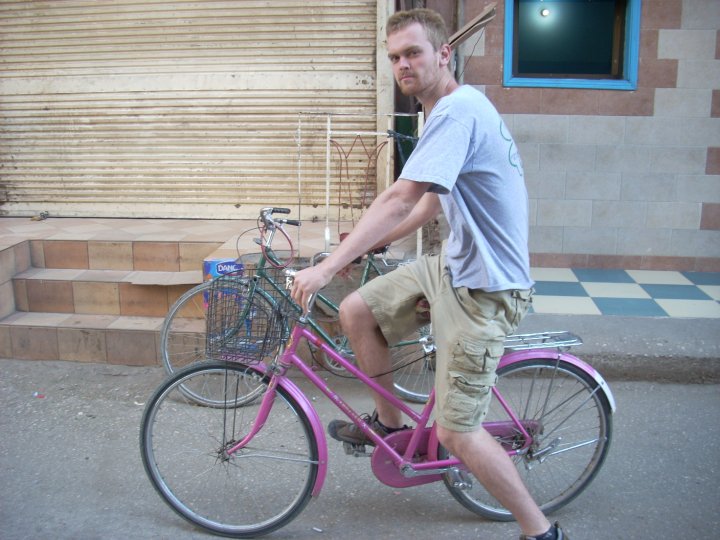
These bikes weren't your run of the mill variety- they had character, as if they were their own individuals. Ben selected a stoic green one, while I nabbed a pink beaut with a basket and all. Now, granted they were probably 20+ years old and the brakes didn't work. But over the course of the day, Ben and I formed a special bond with these bikes that made it hard to let them go.

Our first objective was to actually cross the Nile and get to the West Bank (no, not that one). We drove to the corniche and soon located the public ferry, which carries people across for just a pound a person. We'd read in our guide book that even if you had a bicycle, you should only be charged 1 LE, so we were prepared when the Egyptians at the entrance tried to charge us 2 LE each. We remained calm and collected in the face of their blatant lies, looked around, and noticed an Egyptian man behind us also with a bike. We told them we wanted to see how much he paid, at which point they quickly let us through for the correct price of 1 LE. It may have only been a pound difference, but we relished our little victory. It was a good way to start the morning.

On the other side, we hopped on our bikes and started making our way to the West Bank's destinations, about 3 kilometers from the Nile's waters. We passed lush groves of banana trees on either side as the mountains in the distance came closer. After being cooped up in Cairo for three months, it felt so freeing to be able to cruise around on our bikes and be in complete control of where we went and what we did. Ahh, good times.

We passed by the Collosi of Memnon, and continued our way westbound until we got to the ticket office. For whatever reason, you have to purchase tickets for most of Luxor's West Bank tourist sites at a central location. We purchased tickets for three locations at the reduced student rate (50% off = huge), and set off for our first one, Medinet Habu, also known as the Temple of Ramsees III. It was a lovely temple complex, chalk full of crumbling statues and several walls covered in intriguing Egyptian depictions (inluding this one to the right of some sucker getting it in the face!).

Our next stop was Deir al-Medinat, a former settlement where the Pharaoh's workers once resided. Aside from a couple tombs adorned in (apparently time-proof) brightly colored artwork (which, of course, we couldn't take pictures of), there didn't appear to be a whole lot going on there. The same could be said about the Valley of the Queens. A couple of interesting tombs, but nothing really astounding.


The Ramesseum, Ramsees II's mortuary temple, was actually pretty interesting, although it wasn't nearly as well preserved as Medinet Habu. In fact, its focal point was a huge statue of Ramsees II that lay broken in several pieces. Additionally, it would've been a lot more intersting if an old Egyptian guy hadn't been following us around, undoubtedly trying to score some baksheesh from us.


After finishing up at the Ramesseum, we pedaled our way to the Temple of Hatshetsup, another well-known Egyptian attraction, but for a variety of very different reasons. On the one hand, the temple an impressive edifice, dedicated to one of Egypt's most successful pharaohs, who also happened to be a female. On the other hand, it's also the site of a 1997 terrorist massacre that left 62 people dead, most of them foreign tourists. Cheery thoughts indeed!

Upon arriving, we set about looking for a suitable place to lock up or bikes. This had been a challenge for numerous reasons. For starters, the bike lock itself was silly short, making it difficult to even find a post or tree or fence that was skinny enough to allow us to lock two bikes to it. Secondly, we had to strike a delicate balance putting the bikes far enough away from tourist security so that they didn't ask for baksheesh, but close enough that randos would be discouraged from messing with/stealing them. We thought we found a suitable place in the parking lot of the Temple of Hatshetsup, but then some punk kids came up to us and tried to provide us with "protection" services, which we tried to tell them we didn't need. Nonetheless, they wouldn't budge, so we had to find a different spot, and became paranoid that the kids would sabatoge our bikes or something. Little tykes.

The temple itself was pretty neat, but I'm running out of good ways to describe pillars, hieroglyphics, and statues, so a couple of pictures will have to suffice:


After the temple, we made sure to refill our water bottles and paused to have a healthy portion of the bread we'd purchased that morning. Our next stop was the Valley of the Kings, 6 km away, by far the longest stretch of biking we'd be doing. Additionally, the sun was just about at its peak, and my body (more specifically, my neck) was beginning to feel it. I was anticipating a difficult ride, and that's what I got. The bike had been a champ up to that point, but it had some serious trouble keeping steam. And the weirdest part was that I could swear we were going downhill! I was convinced the little kids had screwed something up in retaliation for not not patronizing them. Egyptian Business Ethics 101.

Finally we got to the entrance for the Valley of the Kings and proceeded to take another brief rest and rehydrate break. The Valley of the Kings has a plethora of pharaonic tombs, but only a few of them are open to the public at a time, and a regular admittance ticket only allows you access to three. Our Lonely Plant guide book suggested which three to visit, but, of course, only one of them was open. So with that as really our only reference point, we headed up the hill and into the valley.

We followed the markers to the tomb we had selected (I forget the name), climbed a steep set of stairs, and entered. It was cool I guess, but I was a little over tombs at this point. Also, the no photography policy was a little annoying. The second tomb we checked out was actually more extensive and interesting than the first one, which the guide book had mentioned. The final one was a bit of a disappointment: although the map outside of it made it seem like it went on forever, tourists were only allowed access up to a certain point.

After finishing up with the Valley of the Kings, we got ready for the bike ride back. Since I was convinced that the grueling bike ride in had been downhill, I was prepared for a beastly uphill ride. However, it was a breeze, and it was definitely not uphill. The sun must've made me a little crazy on the approach trip. But if, you're going to be wrong, I suppose it's better to expect the worst and then get the best. Not too shabby.

Last on our list of West Bank sites was the Temple of Seti. We actually hadn't planned on seeing it, but we were making such good time half way though the day that we'd gone back to the ticket office and purchased additional tickets for it. Possibly a mistake, as it was an extremely boring place. Oh well.

We spent the next half an hour or so carelessly pedaling through the endless fields of lush banana farms that line the Nile, and eventually made our way back to the ferry. We had a late lunch, went to Mass at a tiny little Franciscan church, and that was that. It had been an extremely enjoyable day. We'd thoroughly dominated all of the West Bank in typical Jonathan and Ben style (cheap, rugged, and efficient). Even though the pharaonic temples and tombs didn't blow my mind like some of the sites we'd seen over spring break had, it was still a great time, in large part due to the joy of bike riding. It was great to get some fresh air (well, at least fresher than Cairo air) and solid exercise. Perhaps most importantly, it felt great to be free and empowered, a feeling that only a bike ride could provide to someone who's been trapped in an urban sprawl, shuttled to and fro daily on a bus for over two hours. Maybe it wasn't so much that I missed riding a bike as much it was that I missed being out in the empty openness with the wind in my hair. I definitely plan on going on some joyrides, by bike or by car, once back in Minnesota. Corny, perhaps, but true.

On Monday, we only had a few destinations, all on the East Bank. We took public transportation to Karnak, an expansive and imposing complex of temples that covers two square kilometers. Karnak is considered by many to be the largest religious site of the ancient world, an impressive accolade when one considers its competition. Karnak was really an amalgum of all the things we'd seen the day before thrown into one huge display, with a plethora of statues, pillars, and depictions nearly every way we turned. We spent about an hour exploring many of its nooks and crannies, but probably didn't come close to seeing all it had to offer. One place we did find, however, was a neat little room, completely dark except for a single shaft of light that came down from the ceiling. It was a fascinating spectacle that had a sort of mesmerizing effect on me. Below is a neat picture Ben took that instantly became my Facebook profile picture.
After Karnak, we walked along the corniche and stopped at the Luxor Museum, though we ultimately decided not to go in. The ticket was a little pricey and we figured we'd see more than our fair share of Egyptology stuff at the Cairo museum, which we still have yet to visit. We continued on our way and visited the Temple of Luxor, which was more of the same (can't you tell that I'm getting bored with this). It was 1 o'clock in the afternoon and we had basically exhausted all of our options in Luxor. Our train wasn't leaving until 10 pm that night. Here in lies the drawback of being too efficient. We killed time by napping and reading before meeting up with our AUC cohorts and playing cards for a while. At about 8, per the suggestion of our friend, Shannon, Ben and I had dinner at a nondescript little eatery that served us a delcious meat pot, soup, salad, rice, and bread, all for only 10 LE. It was a delicious meal and left me feeling as full and satisfied as I ever had since being in Egypt.

We got to the train station at 9 pm and waited a while before our Cairo-bound train pulled in. This train was at least in better shape than the one we had taken down, although it had its share of drawbacks: it wasn't compartmentalized and they didn't turn off the lights the entire night. If you know me, you probably know I'm a very, very deep sleeper. However, although it takes a lot to wake me up, it's pretty difficult for me to go to sleep. I lay in bed for at least half an hour before I doze off, and that's on a good day with perfect conditions. Needless to say, I found it nearly impossible to fall asleep on this train. I tried a lot of different techniques, even laying down on the floor, but nothing really worked. I finally got to sleep around 4 am and slept until about eight. After what seemed like forever, we finally made it back to the Ramsees station at 10:30. We got a cab back to Zamalek and that was that.

Overall, I'd say my four day excursion to Upper Egypt was pretty successful. There were a lot of uncomfortable hours spent aboard trains and some of the sites might not have been mind-blowing, but we found enjoyment in other, unconventional forms, such as strolling around Elephantine Island or pedaling through the banana fields of Luxor. It was, for the most part, a relaxing and carefree jaunt, taken just before the horrors of the end-of-the-semester workload finally must be confronted. Speaking of, I've got to write 1000+ words a night for the next week, so I should probably wrap this up. Wish me luck!

April 22, 2010

Sorry Jerry, I've got plans...

First order of business: congrats to Indiana's own, Terry Howard, winner of last weeks بكم contest. Mr. Howard correctly guessed the cost of my Coke, koshari, and strawberry wafer dinner (10 LE). Plus, he was the first to answer and did it with an exclamation point. What confidence! What gusto! What pizazz! Terry, I'll have your gift for you in the fall.

Moving on. Today is a pretty significant day, for a variety of reasons. For starters, beginning today, I have officially less than two weeks to crank out two 3,500 word research papers that I haven't even begun researching, much less writing.

Today also happens to be the date of the 2010 NFL Draft, a nirvana of sorts for me amidst this personal hell known as the NFL off-season. The draft is the most over-hyped and over-anticipated event in all of sports, but I still love it anyway. You kind of have to-- it's the only significant football related event to occur until August, or whenever training camp starts up. I don't know about you, but that's a long time to go without my football fix. I usually plan on savoring the draft for all it's worth.

However, watching the Packers draft Jerry Hughes and making a dent in my workload won't be occurring this weekend. I've got plans. This evening, I'll be embarking on a four day journey to Upper Egypt that will take me to Aswan, Abu Simbel, and Luxor. The train leaves at 10pm Egypt time, well before the draft kicks of at 7pm EST.

I'm not sure how I'm going to cope, not knowing any of the Packers' selections over the three day draft. In fact, missing the draft (along with the whole "needing to do schoolwork" thing) actually made me consider not going on this trip at all.You may think think this sounds extreme, or that I'm exaggerating, but this is not the case. The draft is important to me, and it's been a fixture of my Aprils for most of my post-elementary school life.

With all that being said, sometimes you have to make sacrifices, and this is one of those times. I'm only in Egypt for three more months, and I'm not sure if I'll ever be back here. Luxor, Aswan, and Abu Simbel are simply most-see-destinations, and I know I'd be kicking myself in the future if I never went down to take a look at them. Yes, I guess I'd prefer if this little five day vacay could've happened some other time than draft day, but you've gotta take what you can get.


(In reflection, this seems extremely petty. You know you've got a good life when deciding to go on vacation and miss watching a sporting event is considered a "sacrifice"- but whatever, go with it).

Anyway, I guess I just wanted to give you a heads up that I'll be on the road again, and I should have some exciting stories and pictures for you in a couple days' time. Stay tuned.

April 17, 2010

This ain't how they do it in Kentucky...

Last night, I attended the Cairo Derby. Instead of showcasing horses running around a circular track, this annual event pits Zamalek and Al-Ahly, Cairo's most renowned sporting clubs and bitter rivals, against each other in a soccer match that almost always carries significant implications. Yesterday's contest was no exception.

Aside from bragging rights, the title of the Egyptian Premier League was on the line. Al-Ahly, comfortably sitting nine points ahead of second place Zamalek in the standings, would extend their advantage to an insurmountable figure with a victory, essentially guaranteeing themselves the title.

Now, you'd think that a match-up of such epic proportions with so much on the line, (between the two best soccer clubs in all of Africa, mind you), would have quite a weighty price-tag, but we were able to obtain second-class tickets for only 30 LE a piece (under $6-- crazy). Despite its myriad of shortcomings, there are just somethings about Egypt that are almost too good to be true, and being able to get a ticket to the premier sporting event of the year for chump change is one of them.

So after downing some koshari, I departed for Cairo International Stadium at 5 o'clock along with three other friends. Although the game was slated to begin at 8 in the evening, we'd been warned by Egyptian students that the gates would probably be closed sometime between 6 and 7, making early arrival a necessity. We took a cab to the Nasser metro station and then rode the line to Kobri al-Kooba (for 1LE, mind you; metro is definitely the way to travel when in Cairo), where we got off and proceeded to make our way to the stadium.

Upon our approach, I wasn't sure if the stadium was about to host a soccer game or a speech by President Mubarak himself. There were military personal as far as the eye could see, forming a human wall around the stadium complex and lining the surrounding streets. Some sat atop horses while others were decked out in imposing-looking riot gear, shield and baton included. I suppose it shouldn't have come as a surprise to see such security measures in place; with almost no opportunities to vent their frustrations in the political realm, Egyptians pour all of their passion into their fanatical following of soccer. Understandably, their emotions sometimes boils over.

We waited at the gate for a bit for another friend to show up, and then we made our way in. Unbeknownst to us, we had entered on the Al-Ahly side. I guess this wasn't a huge deal, but as we were all actually pulling for the White Knights of Zamalek, we though it'd be a good idea to move to a different section. After talking to an officer, who agreed it was probably best for our bodily well-being to relocate, we were allowed to cross through the "DMZ" (an empty section of the stadium with riot lines on either side), as Josh from ND put it, and join our Zamalek brethren on the other end of the stadium.

There were still 45 minutes to kick-off by the time we found out seats (mine had a piece missing from it), but we were able to keep ourselves entertained thanks to the back-and-forth chanting between the red-clad Al-Ahly supporters and the white-wearing Zamalek fans. We were also exposed to what could quite possibly be the worst sound a large group of human beings can make: a high-pitched, hemorrhage-in-your-eardrum inducing whistling noise that collectively sounded like a cave full of shrieking bats. This was the noise either side emitted whenever they didn't like something (an opposing chant, an opposing goal, a bad call, etc), so, needless to say, we heard it quite often.

The game finally started up and it wasn't long before things got exciting. To the delight of the 30,000 people seated immediately around us, Zamalek scored in the first few minutes to take an early lead. The crowd went bananas. Things were off to a good start.

Al-Ahly answered back a while later, but the first 20 minutes or so of the game were really dominated by Zamalek. They had numerous shots on goal that just barely didn't squeak in, including this direct kick off a penalty that was thwarted by a great save by the goalkeeper. But despite the plethora of opportunities Zamalek provided for themselves, they couldn't capitalize on enough of them, and went into halftime with the score knotted up at two a piece.

The teams remained deadlocked for much of the second half until Zamalek took the lead in the 78th minute, going up 3-2. The throngs around us were in jubilation. With about 15 minutes left, it looked like Zamalek would earn a coveted victory and inflict a demoralizing blow to their despised rivals.

As the time continued to tick off the clock, the exictement and anticipation around us grew palpably. When the 90th minute had elapses, an official held up a sign digitally informing the players and everyone in attendence that their were four minutes of injury time, four final minutes for Al-Ahly to mount a comeback and possibly salvage the game with a tie.

I was just about to turn on my camera and film the final few minutes when Al-Ahly struck, knotting up the game 3 to 3 with no more than 270 seconds left to be played. As the goal-scoring player whipped off his shirt and ran across the field to celebrate in front of the ecstatic Ahly supporters, the members of the Zamalek section sat in stunned disbelief. They had been so close to pulling off a crucial victory, only to give up the equalizer in the final moments of the game. This type of outcome probably hurt worse than a loss would've.


Self-congratulations to myself for final uploading a video to YouTube and embedding on here. Yay technology!
On our way out of the stadium complex, we each bought a Zamalek flag to demonstrate our solidarity with the White Knights. However, after seeing the following scenario unfold, we tucked them away until we were a few miles away from the stadium: two kids walking a few feet in front of us, with Zamalek flags draped on their back, were swarmed by a group of 20+ teenage Ahly supporters who proceeded to rip at their clothes and push and shove them. Things looked like they were going to get absolutely out of hand before a responsible adult stepped in and calmed things down (he coincidentally happened to be 6'8 and 220- I wonder if that had anything to do with it). We liked to think we were Zamalek supporters, but we weren't staunch enough in our new found loyalty to be on the bleeding end of a blood bath.

All in all, it was a heck of an experience, and for only $6, definitely one I'd be willing to repeat in the future. I've got over three months left here in Cairo, so I'm sure more opportunities to indulge in soccer mania will present themselves.

By the way, here's a news write-up on the game in case you're interested in the finer bits.

April 15, 2010

بكم? - dinner...


Come and get it boys, dinner is served! Contents include: big ol' bowl of koshari and marinara sauce, two packs of strawberry flavored wafers, and a liter of cola. Now that's a paper-writing meal right there.

Just to refresh your memory, $1 equals about 5.4 Egyptian pounds. Whoever is closest without going over will be the winner, and they'll receive some trinkets from foggy old Jerusalem town. Guess away.

April 13, 2010

No, they don't just hand out A's here...

A lot of people think a semester abroad is a time to slack-off and relax, as the academic standards of the host university usually aren't up to par with ND's. Admittedly, this allegedly diminished and less challenging workload was something I was looking forward to. However, if what I've got in store for me over the next five weeks is any indication, this type of thinking needs to be done away with It looks straight up Tough with a capital T. So here's what's facing me head-on (and no, I haven't started on any of it).
  • A 3,500 word research paper for International Relations in the Middle East (due May 5)
  • A 3,500 word research paper for Comparative Politics in the Middle East (due May 5, as well)
  • Two 4 page reading responses for Women, Islam, and the State (one due this Thursday, one due in two weeks)
  • An outline and annotated bibliography for my final paper for Women, Islam, and the State (due next Thursday)
  • A day of leading class discussion in Women, Islam, and the State (sometime in May)
  • A 15 page research paper for Women, Islam, and the State (due May 20)
  • Four final exams (IR in the ME, CP in the ME, Modern Standard Arabic, and Egyptian Colloquial Arabic)
As you can see, not quite the walk in the park I was expecting. While I guess I'm not complaining about the workload (after all, this is college), I'm still pretty surprised. From what everyone's said, studying abroad, particularly at AUC, was a piece of cake. I'm quickly learning that may not be the truth.

Still on the list...

Well, in case you haven't heard, I received a grant from Notre Dame that will allow me to prolong my stay out here in the Middle East. I'll be taking part in an intensive Arabic program this summer in none other than Cairo. Should be home in early August. But I'm sure I'll talk more about all this later.

Anyway, with an extra two months out in this neck of the woods, my opportunities to travel have just expanded immensely, especially considering the fact that I have three weeks in between the end of the spring semester at AUC and the beginning of my summer program. That's a lot of time that needs to be killed. Here's a brief collection of destinations I'd still like to cross off my list before I head back to the Land of the Free:

 Alexandria, Egypt: Located only two hours away from Cairo, Egypt's second biggest city offers a discernible change of pace from the country's hectic capital. Although the seafood the city is renowned for isn't likely to suit my fancy, I'm sure I'll be content with the Roman ruins, the Qaitbay Citadel, and just the refreshing Mediterranean air. I'll probably make my way up there over a weekend in the summer.

Luxor, Egypt: Luxor is an absolute treasure trove of ancient Egyptian wonders. You need at least three days just to scratch the surface. It's a bit of a trek (10 hours by train, straight south from Cairo), but I plan on getting down there sometime later this month. And the sooner the better- it's supposed to be 110+ F in the summer months.

Dahab, Egypt: When the summer heat rolls in, I can think of nothing more appealing than a get-away to the lazy Red Sea resort town of Dahab. It may not have the glitz and the glam of Sharm al-Sheikh, but that's really not what I'm looking for. A few days of swimming, snorkeling, and plain and simple relaxation are all I need. A celebratory trip to Dahab (which means "gold" in Arabic) appears to be in the cards following the end of classes.

Mount Sinai, Egypt: Located smack dab in the middle of the arid and rugged Sinai Peninsula, legend maintains that this is the location where Moses received the Ten Commandments. Regardless of the merits of this claim, the sunrise from Mt. Sinai is supposed to be quite a spiritual experience in its own right. I'll probably make my ascent on the way back from Dahab to Cairo.

Istanbul, Turkey: Well it didn't look like I was going to be able to fit Turkey in, but now that I'll be in the area until late July, I really have no excuses. I'm not sure what all I'll be able to see in Turkey (it's a massive, fascinating country that you'd probably need to spend a few weeks in to do it full justice), but Istanbul is definitely a necessity. Simply put, there is no other city in the world quite like Istanbul. It is the only city to straddle both the European and Asian continents. It has served as the crown jewel of the Byzantine Roman Empire, the Ottoman Empire, and is currently the cultural and social capital of one of the Middle East's most powerful players. Only decades ago, it was the seat of the Islamic Caliphate, but now is championing Turkey's push for admittance into the European Union. Caught somewhere between the East and the West, Christianity and Islam, and antiquity and the future, Istanbul is one of the world's most fascinating places. I'm planning a trip in early June.

Kurdistan, Iraq: What! I want to go to Iraq? But isn't there a war going on there? Isn't it ravaged and unsafe? Isn't travelling there a death wish for any white-skinned American? Well, perhaps partially true. Much of the country is highly volatile and dangerous, completely unsuitable for travel. However, the same cannot be said for region in the northwest that's controlled by the Kurdish Regional Government. Since the '91 Gulf War, this area has been essentially an autonomous country, only loosely affiliated with Baghdad and the rest of Iraq. While the rest of the country fell into chaos following the aftermath of the 2003 invasion, Kurdistan remained relatively calm and tranquil. "The Other Iraq," as it's happily referred to by locals, has undergone a bit of a boom in recent years and now has an emerging tourist economy. The draw for me is the area's beautiful natural landscapes, as well as the simple fact that I'll be able to say, "I've been to Iraq." I'm thinking about working a visit to Kurdistan in as part of my trip to Turkey.

April 11, 2010

Is that a sandstorm or are you just happy to see me...

This morning, as the bus that shuttles us to school plodded its way through Cairo, I took a peak out the window at the urban sprawl around me. This in and of itself is a bit of a novelty; normally at this point in my day, I'm asleep with my head uncomfortably resting on the back of the seat in front of me, attempting to milk the hour long bus ride for all the sleep its worth. But today, I had to cram for an Arabic midterm that I had, of course, neglected to study for the night before, and was therefore wide awake.

The view outside my window was one I had grown accustomed to: ungodly amounts of traffic, alternating between a crawling pace and pure, unadulterated stagnation; the sea of faded gray and tan, flat-roofed buildings, as far as the eye can see; and, of course, a thick layer of all-enveloping smog.

Yet today, the smog seemed even more suffocating than usual. I thought this could be attributed to even higher levels of air pollution (which, honestly, would seem impossible; I already feel like I'm living inside factory smoke stack), but as we made our way further and further away from the downtown area and the heaviness in the air still hadn't begun to recede, I knew something else was up.

When I stepped off the bus, my answer hit me in the face- literally. A healthy mix of sand and dust, borne by the wind, pelted my skin. Soon my eyes and mouth began to feel the effects and I was forced to turn my back to the on coming tirade. Al-Khamsin had arrived.

Al-Khamsin is a dry, dust-bearing wind that sweeps across North Africa every spring. Its name is derived from the Arabic word "خمسين",  which means "fifty," the length of time the wind generally blows. Although it's usually nothing too bad, just some sand here and there, I've heard that it can get so bad on occasion that the sun becomes completely blotted out and you can't even see your hand in front of you.

The sand and wind seemed to die down as the day went on, but somehow a significant amount managed to subtly sneak in through my mouth, causing irritation to an already sore throat. If the untold amount of air pollution in Cairo didn't provide a good enough reason to keep your mouth firmly closed when walking around town, getting a mouthful of sand and dirt certainly seems like a strong compelling factor.Oh well, only 49 more days of this (khamsin, that is).

April 10, 2010

Putting spring break to rest...

Well, I am now officially back in the swing of things here in Egypt's capital. I completed two days of school, had four servings of koshari in less than 72 hours, and spent an entire day doing nothing mention-worthy. Man, it's good to be back!

Anyway, I'm going to do one last post reflecting on where I've been over the past two weeks and what I've been up to, before finally closing that chapter and moving on. But rather than do a big write up, I'll make it a little easy on the eyes and whip up some lists. So without further ado, I present to you the highs, the lows, and everything in between of Spring Break '10.

The Five Best Food Items

  1. Kafta wraps from University Sage, Beirut: located right across from the beautiful AUB campus, University Sage is one of many tasty eateries that line Bliss Street. It sets itself apart with its hearty, delicious, and fairly cheap (2500 LL = $1.65) kafta wraps. We had them on three occasions during our time in Beirut.
  2. Soft serve on the streets of Aleppo: Walk through the streets of Aleppo, and it's hard to go more than a minute without spotting a vendor whipping up soft serve vanilla ice cream. Though it wasn't anything exotic, it was a sweet little snack on the very cheap side (5 Syrian pounds = $.10)
  3. Chocolate filled croissants in the Old City of Damascus: While on our way to a minibus station, we stumbled across a bakery serving fresh goodies straight from the oven. The pastry itself was quite good, but tack on the fact that its warm and fluffy and the chocolate is gooey and at 10 Syrian pounds you've got yourself a winner.
  4. Ice cream from Bliss Street, Beirut (pictured): Just a few meters away from the kafta wraps of University Sage was some of the most decadent and delicious ice cream you'll ever see. Of course, since it was on our way back to the hotel and we'd just finished dinner, we had to stop and indulge ourselves frequently.
  5. Pizza bread Damascus's Old City: These mini-pizzas, coming in cheese, veggie, and meat varieties, were the perfect option for a light afternoon snack. At 15 Syrian pounds (= $.30) a piece, one could afford to get a few.
The Three Worst Places Stayed In
  1. The New Swedish Hostel, Jerusalem: The only thing Swedish about this place was the name, unless you consider grumpy staff and bathrooms with ceilings so low you can't use them to be Swedish. I understand that prices go up during the Easter season, but charging $22 a night for a bed in a 16 person dorm is blatant piracy.
  2. The Regis Hotel, Beirut: The Regis was actually the nicest hotel we stayed at; it was also the most expensive. It was nice having free internet (when it worked), but the apathetic, impatient, and irritable nature of the young man who ran the place was a major turn off. Plus, the bathroom always flooded whenever the shower was used.
  3. Al-Rabie Hotel, Damascus (pictured): At Al-Rabie, you get what you paid for. In our case, that happened to be a roof top bed. While the building itself was very nice and had a cozy little lounge downstairs, between the cold and the calls to prayer, roof-sleeping was a pretty uncomfortable and inadequate experience, at least for the first night. 
The Nine Most Favorite Attractions 
  1. Crusader castle/Roman ruins of Byblos: Perhaps it was the picturesque Mediterranean backdrop or the fact that we had the whole place to ourselves for a couple of hours, but I absolutely loved Byblos. It may not have been quite as expansive or awe-inspiring as some of the other sites, but I explored every nook and cranny of it, doing my best Nathan Drake impression along the way.
  2. Baalbek's Roman ruins: Maybe my ignorance of all things Roman is to blame, but I was simply dumbfounded by what I saw in Baalbek. Not only was the number of ruins impressive, but the sheer size of some of them was astounding. I've said it once, but I'll say it again, if you want to see good Roman ruins, come to Lebanon.
  3. The Church of the Holy Sepulcher in Jerusalem: Attempting to explain this place is a futile endeavor. Simply put, it gives off an ambiance that no other place in the world can match. Its hodge-podge assembly, dimly lit corridors, and embarrassment of holy sites leaves those who enter bewildered and taken aback, but undeniably imbued with a sense of awe. Truly one of the most bizarre and mystifying places I've ever set foot in.
  4. Petra (pictured): The admission fee at Petra is pretty steep (33 Jordanian dinar = $46). However, since it's entered the ranks of the new Seven Wonders of the World, I suppose its earned the right to be overpriced. And it's not like we didn't get our money's worth: we spent a whole eight hours hiking and climbing. While the ancient structures weren't as numerous nor as impressive as I thought they'd be, the natural beauty of the landscape was worth it. It was if an artist's palette of a multitude of reds, oranges, yellows, pinks, and browns had been carelessly spilled on the barren rocks, without any rhyme or reason.
  5. The Krak des Chevalliers- The Krak is the absolute epitome of a childhood fantasy castle. It's massive, it's foreboding, it's perched amongst the clouds atop an barely-scalable mountain.The passages inside the castle were vast and provided us with ample ammunition for exploring. However, the fact that they were shooting a film there, and the place was littered with cheesy Pharonic-themed set pieces was a bit of a detraction. Nonetheless, the view of the castle cast against a cold, gray sky was priceless, and provided me with a mental image I won't soon forget.
  6.  Jeita Grotto: Nestled in the valleys of the Mt. Lebanon mountain range, the Jeita Grotto is a startling place of natural beauty. Here you'll find rock formation formations of every shape and size, each individually molded by time and the steady drip of water. Inside, it felt like walking through some type of Gothic-style cathedral one would encounter in a dreamworld. Not being allowed to take pictures kind of stunk, but the boat ride in the submerged lower cavern was certainly a highlight I don't need visual documentation to remember.The 
  7. Aleppo Citadel- "Duh-duh-DUN...dun-dun-dun!" That tune, straight out of Lord of the Rings, was instantly playing in my head the second I saw the Aleppo Citadel's epic ramp.Stretching across the now-empty-moat to the citadel's gatehouse, it's no wonder enemy forces were never able to penetrate this fortress atop a man-made plateau. 
  8. The Ummayid Mosque in Damascus: The Ummayid Mosque is a sprawling complex, easily the biggest and most impressive mosque I've been to yet. The art work that adorns its courtyard, over a thousand years old, depicts simple daily but in an ornate fashion. It also doesn't hurt that the mosque is home to the final resting place of none other than Salah al-Din, as well as the Prophet's grandson, Hussein, and the head of John the Baptist.
  9. The National Museum of Beirut - Simply put, one of the best museums I've ever been to. The extent of its of collection of Roman sculptures and artifacts was impressive, yet the museum wasn't cavernous enough to lose a sense of approachability and warmth. I would've loved to see what wonders it housed before the Lebanese civil war.
The Six Lowest Low-Points
  1. No Escape from Israel: We were feeling pretty good about skipping out of Jerusalem a day early and getting back to Egypt in time for a day of rest and relaxation before classes resumed. We'd been traveling for 12 days at this point and were ready to be done. When we learned that no public transportation would be active the next day because of Shabbat, I was honestly distraught. In the end, we did manage to make our way back to Cairo (expensively), but at that moment when I thought we were stuck in Jerusalem for another day I was at my lowest point since being over here in the Middle East.
  2. Stuck in Karak/Missing Jerash: We had a fool-proof plan devised to see both Karak and the Roman ruins of Jerash in one day. Unfortunately, we didn't account for transportation alterations due to it being a Friday. As a result, we ended up waiting on a bus in Karak for over two hours before it even began moving. Not only did we not see Jerash, but we didn't get back to Amman until after most of its attractions were closed as well.  
  3. Dinner at Kababji:  It was our last night in Lebanon and we thought we'd celebrate a little by taking it easy and going to a sit down restaurant, Kababji. The place looked nice, but not too expensive. They had "platters," which, although at 15000 LL were a lot more than we typically paid for food, sounded pretty filling. They ended up being entirely inadequate, a reality that stunk even more considering filling kafta wraps for a sixth of the price were right around the corner. It may sound a little silly, but we beat ourselves up for
  4. The Days after Petra: Not going to lie- Petra ravaged our bodies. Apart from the damage done to our joints and muscles from the grueling eight hours of scaling mountains and climbing over ruins, our skins was in serious distress after being exposed the the hot Jordanian sun sans any protective ointment of any kind. This one day of severe exposure had long-lasting ramifications: I got tired more easily, was constantly itching, and experienced sharp pain whenever anyone touched my shoulders or neck. My skin is still peeling.
  5. Lost in Beirut:We'd enjoyed a pretty productive afternoon getting acquainted with beautiful city of Beirut. But as night set in, we ran into some complications returning to our hotel. After walking for an hour in what we hoped was the right direction, we made the mistake of thinking we were home free after coming across a familiar landmark. However, one wrong turn took us at least a half hour out of our before we came to terms with the fact that we were lost. I'll never forget opening the book after we learned we were at the Pigeon Rocks, locating ourselves on the map, and wondering How the heck did we end up here?
  6. Complications at the Airport:Being detained at the Beirut airport for 45 minutes was no way to begin a trip. It turned out to be just a minor bump in the road, but at the time, I was scared our entire two-week vacation was about to be derailed.


    The Four Greatest Surprises/Disappointments Encountered
    1. Syrian Hospitality (pictured): Our Lonely Planet guide book certainly didn't lie: the people of Syria were warm and inviting. Whether it was the man who tried to give us his sandwich in Aleppo or the worshipers at a Damasucs mosque who practically dragged us inside to observe their celebration of the Birth of the Prophet, Syrians demonstrated a kindness that you wouldn't expect from the rap their country gets back in the US. While I definitely feel that the Syrian government is anything but peaceful and harmless, the Syrian people certainly deserve a classification of their own.
    2. Israeli Craziness: It should probably be expected around Easter time, but Jerusalem was bonkers. It wasn't really the sheer amount of people rushing to and fro- I was actually expecting that. Rather it was the absurd expensiveness, the irritating street vendors, and the over-zealous commercialization of spiritual sites. Plus, shutting down the entire country on Shabbat was a little irritating. I understand you've got your religious tradition, but seriously...can't the Muslims or Christians drive the buses at least?
    3. Middle Eastern Diversity: It was extremely refreshing to see that no city we traveled to was like Cairo. In fact, no two cities we traveled to were the same at all. Beirut was highly swank and cosmopolitan, Damascus was stately and vibrant, while Aleppo was charming and calm. Each place had its own distinctive feel to it, and each gave off a different vibe. A pleasant surprise to find that not every Arab city is noisy, polluted, chaotic and full of professional scam artists. Which leads me to...
    4. Epytian Scamming: You mean to tell me that despite the fact that I'm a student in your country, I've already paid $30 for visas on two separate occasions, and I'll be living in your borders for the next four months, I have to pay a 75 LE entrance fee? While this was certainly a disappointment, it shouldn't have been a surprise- Egypt is more or less the land of the scam.
    Well that's that. Funny how I chose to write in list-format to avoid excessive writing and then end up sitting at my computer for two hours. Oh well.

    My two week journey through Lebanon, Syria, Jordan, and Israel was an amazing adventure, one unlike any I will ever experience again. There are some things you can only do when you're young and carefree and I think this was one of them. I made some memories and saw some things that I won't soon be forgetting

    Before wrapping this up, I want to give a final shout out to my partner in crime, Mr. Benjamin Michael Gavel. Simply put, if I had gone with anyone else, this trip just wouldn't have happened. Ben and I had the exact same goal in mind: to see as much as we possibly could, as cheaply as we possibly could. And boy did we live by that mantra: we slept in dumps, took public transit everywhere, ate almost exclusively from street vendors, woke up by 7 am almost every morning, walked whenever the opportunity presented itself, and beat ourselves up for days when we mismanaged time or over-paid for food. It was an ironclad partnership founded on shared desires and mutual respect, which saw its way through plenty of tight spots and rocky passes, but no worse for the wear. There were times when I felt like slowing down or taking a day off, but Ben pushed me to press on and I like to think I did the same for him. We both helped each other to get the most out of the experience and had a great time while doing it.

    So as corny as it sounds, not only did I have a heckuva trip, making oodles of memories that will last a lifetime, but I also forged a battle-tested friendship along the way. Not too shabby.
    In case you're wondering, this is my happy face in pictures. I actually do like the guy.

    April 06, 2010

    If a picture is worth a thousand words...

    ...then I wrote about a 1,452,000 word essay over the past two weeks. After being thwarted by crappy internet connections in every city not named Beirut, I've finally been able to upload my pictures from the rest of the journey. Click on the pictures below to see the rest of that particular album.

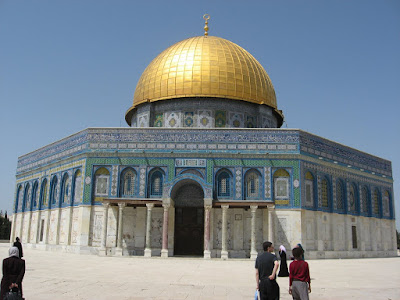
    The Beautiful Dome of the Rock, Islam's third holiest site, located on the Temple Mount in Jerusalem
    The expansive view from the crusader castle at Karak.

    A cliff-side temple from the ancient stone city Petra

    Escape from Israel...

    You know you're glad to get out of a place when the thought of Cairo and all its traffic, noise, pollution, and scams is not only stomachable, but actually evokes a feeling of longing. Yet that's the way I felt after a couple of days in Israel and the Holy City of Jerusalem.

    Let's start from the beginning.

    On Holy Saturday, April 3, Ben and I were in the middle of a familiar routine: waking up at the crack of dawn (oh wait, I actually didn't go to bed the night before, so I guess I didn't do any "waking up") in order to catch a bus to a new and exciting city. We had spent the past three days in Amman, and although Petra was quite a spectacle and the crusader castle at Karak was all fine and dandy, we were a little disappointed with our time in Jordan. We had spent far too much money in the relatively expensive country, had gotten thoroughly scorched and broken down while hiking for eight hours in Petra, and had missed visiting the Roman ruins in Jerrash on what turned out to be a highly unproductive Friday (we spent two hours sitting in a bus- that was not moving...enough said). We were hoping Israel would provide some invigoration and a fitting finale to our two week journey.

    We took a 7 am bus from Amman to the King Hussein/Allenby Bridge border crossing. Here we transferred buses and were shuttled across to the Israeli side, and prepared to be processed (I love the sound of that). Similar to the mystique surrounding crossing into Syria, there is a lot of hype and hysteria surrounding entrance procedures at Israeli borders. For starters, there's the whole deal about getting the dreaded "stamp of death." Basically, because Israel is considered a state enemy of several Muslim majority countries (Iran, Lebanon, Syria, Indonesia for starters), the presence of an Israeli visa stamp in your passport will prevent from gaining admittance into any of them. Apparently you could ask to get your visa stamped on a separate piece of paper, but there were tales of custom officers either ignoring your request or "forgetting" and stamping your passport "accidentally."

    And before you could even think about worrying about the visa itself, you had to pass through security. This was considered an especially difficult task if you'd visited Arab countries beforehand (ding ding ding!). There are stories of people being detained and grilled for hours at the border and others being rejected for no apparent reason. Needless to say, I was a little nervous as we made our way into the facility, especially with my passport chalk full of Lebanese and Syrian stamps, as well as the fact that I had in my possession a book that featured Mahmoud Ahmadinejad and King Abdullah shaking hands on the cover.

    The process itself wasn't too bad- probably only forty five minutes in total. Nonetheless, there were a couple of disconcerting moments. For one, seeing a teenager wearing plainclothes- a nice green polo and some khakis if I recall correctly- and shouldering a decked out M4 assault rifle definitely is cause to pause. Another image, or rather experience, that messed with my mind was being grilled by teenage girls, who serve as Israel's primary custom agents. I came away from that feeling a little vulnerable and confused. But whatever. We were through, and on our way to the holiest of holies, Jerusalem.

    We settled into the little shuttle that would be taking us to J-town. During the 25 minute drive, we struck up a conversation with an interesting French woman who has been traveling away from home for three years and apparently believes that sharks are our "friends." Nice, but crazy. After a while, we entered a tunnel leading directly through a cliffy hillside. When we emerged on the other side, our eyes were drawn immediately to the golden dome of the Temple of the Rock. We were in Jerusalem.

    We got dropped outside the Damascus Gate. Now the real fun began. For some unknown reason, during the the 3+ hours that I had spent on the computer the night before when I was refraining from sleep, I had neglected to find out the location of where we'd be staying, the New Swedish Hostel. I knew it was in the Old City, but after that, well, I wasn't too sure. So without really knowing where we were or where we were going, we entered through the gate and plunged into the madness that is Jerusalem's Old City.

    The streets of the Old City are narrow and crowded, and that's on a good day. The scene that unfolded before was absolute pandemonium. Apparently there was an event that afternoon that everybody and their uncle wanted to attend.Throngs of eager pilgrims mauled anyone who got in their way. Little old ladies clutched at Israeli security personnel and begged them to let them through closings in the street. After a few minutes of trying to deal with the insanity, Ben and I concluded that it'd be a good day to check out some of the sites outside of the Old City walls.


    We headed out the Jaffa Gate, walked around the outer wall and eventually came to Mt. Zion, where the featured attractions included King David's Tomb as well as the room where Jesus and his disciples broke bread in the Last Supper. After that, we set out for the Garden of Gethsemane on the Mount of Olives, where we saw the Church of All Nations, caught an outside glance of the Cathedral of Mary Magdalene, and put ourselves in good position for some panorama views of the Temple Mount and the rest of the Old City opposite us.


    We headed back in to the Old City, where things had calmed down a bit. I was about ready to collapse. I hadn't slept the night before, and climbing up hills in the scorching heat with pre-existing sunburn was not the ideal remedy. I contemplated taking a nap, but decided to man up and see what else we could do that night. We looked for some food, but almost everything we found was absurdly overpriced, at least by Middle Eastern standards. We were about to go hungry until we ran into a hole-in-the-wall establishment serving kebab sandwiches for a somewhat reasonable 8 shekels (conversion rate is 3.7 shekels to a dollar, so a sandwich was about $2.20).

    We returned to the hostel after eating. It came to our conclusion that staying in the overpriced hostel in the midst of this overpriced city was probably not the best way to end what had been an extremely frugal trip, so we canceled our reservation for Monday night. The plan was to leave Monday and get back to Cairo with enough time to get things together before classes started on Wednesday. Sounded good.

    As for the next day, Easter Sunday, we had planned to wake up early in the morning, check out the Temple Mount, and then make our way to 10:30 Mass at the Church of the Holy Sepulcher. However, we kept on hearing from everyone and their mother about some amazing service that occurred at midnight. So at 11:30, we headed over to the Holy Sepulcher and checked it out.

    First off, a description of the Church of the Holy Sepulcher is in order. Or rather, an attempted description. It is simply something that cannot described. It is easily the most bizarre, wonderful, strange, odd, baffling buildings I have been in. Calling it simply a "church" doesn't do it justice because it is really so much more. It's a monumental structure of domed ceilings and narrow passages, that gives off the vibe of a crypt or a labyrinth. Ben described it as eclectic, a sort of hodge-podge of a variety of different elements. Its history of construction, destruction, and reconstruction, that spans a thousand years, certainly helps to explain why.

    The Church of the Holy Sepulcher stands today on the spot where most Christian sects believe Jesus was crucified. In addition to this sacred site, the complex (for indeed, that's what it really is) houses several other highly significant relics and holy spots, including the Stone of the Anointing, where Christ's body was prepared for burial, and the Holy Sepulcher itself, the tomb where Jesus was laid after death. Thousands of Christian pilgrims visit it each day to touch or simply view these holy spectacles. We had actually visited a few hours earlier and waited in line for an for the opportunity to enter the Aedicule, where the tomb of Jesus is housed. The building is practically overflowing with relics and shrines, and it probably would've taken a solid couple of days to see them all. Click here to read a bit more about the Church of the Holy Sepulcher.

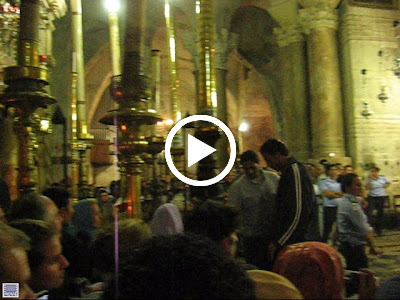
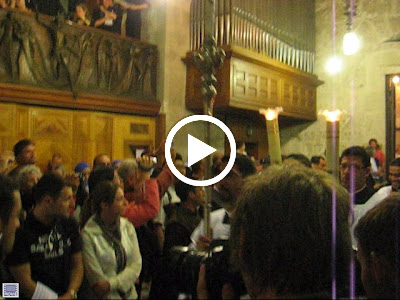
    Anyway, the service, or whatever we attended, was truly fascinating. I'm not entirely sure what went down, but it was quite a sight to behold. A procession of Greek Orthodox, Coptic, Russian Orthodox, Armenian Catholic, and Roman Catholic religious men proceeded throughout the packed quarters to the Aedicule, where some type of traditional ritual was being performed. My senses were overwhelmed as a sea of people pressed in all around me, heavy incense wafted to and fro, candles flickered in the darkness, and the tones of chimes and bells echoed across the domed ceiling.It was a surreal experience. Here's some video footage of what went down.


     I always forget that you can't film things vertically

    After sticking around for three hours with no foreseeable end in sight, we headed back to the New Swedish Hostel and got to sleep. Our plan for the next morning was now slightly altered, and we attended Easter Mass at the Holy Sepulcher, joined by our friend Erin from ND, before anything else. The service was in Latin and the building isn't exactly laid out in a way that is conducive for celebrating Mass with hundreds of people, but it was still an amazing experience.


    After a lunch of candy (not only was it justifiable because it was Easter, but also because it was the cheapest stuff around), we headed to the eastern part of the Old City. We checked out the Wailing Wall (the last remaining remnant of the Holy Temple, where the Holy of Holies resided), and then made our way into the Temple Mount where we snapped some pictures in front of golden plated Dome of the Rock (built on the spot where Muslims believe Muhammad will be ascended into Heaven). It was pretty astounding to think about it: In less than an hour, we had visited some of the holiest sites of the world's three monotheistic religions, all of them within probably a square half mile of each other. Crazy.


    Following our site seeing blitz, we were off to bus station in central Jerusalem to figure out our transportation situation for the following day. Along the way, we talked to some American girls who delivered some horrible news to us: the following day was Shabbat, the last day of Passover for Jews, and a significant national holiday. There would be no public transportation running until dusk. Our best bet would be to hire a private taxi to take us to Tel Aviv, where we could maybe catch a bus south toward Egypt. We hurried back to the Old City where we found an internet cafe that had phone services. We looked up the number for a taxi company, but our worst fear was confirmed: they had closed early for Shabbat. We were screwed. We looked online to see when buses were running, but we wouldn't even be able to get out of Jerusaelm until 8 pm, meaning we wouldn't get to the Israel-Egypt border till early early morning, well before (or after) any buses left for Cairo. Things looked bleak.

    We ran into some other AUC students I knew from class that night, who likewise wanted to get out of expensive,crazy Jerusalem and back to Cairo ASAP. They said they had heard about a bus leaving from Jerusaelm at 8 am for the southern city of Eilat. It sounded too good to be sure. And sure enough, after waking up at 6 am the next day to catch it, it wasn't there. What now?

    Fortunately, we were able to catch a service taxi to Tel Aviv  a little after 8. However, when we got to Tel Aviv, we were presented with another problem: the bus station wouldn't open until 5 pm. Not only did we want to get out of there as early as we could because we wanted to get back to Egypt, but also because we were in what appeared to be Israel's version of a ghetto, complete with impoverished looking minorities and run down buildings. Not an ideal place for five foreigners saddled with luggage to be hanging out.

    We had initially ignored the horde of taxi drivers who wanted to charge us 1000+ shekels for a ride to Eilat ($270 or $54 a person). But after gathering up four others who wanted to travel to Eilat and getting an offer for 900 shekels, we agreed. However, as it turns out, we had agreed to get in a taxi with the driver from hell. The man was insane. He was large and scary and had soulless eyes. I thought at numerous times that he was going to eat me. Other taxi drivers even warned us about going with him, though at the time I dismissed this as jealousy that he had landed the gig.

    When we left the station he demanded payment immediately, something generally unprecedented when taking transportation in the Middle East. When we said we'd pay when we got there, he absolutely flipped out. He spoke no English at all, only really angry Hebrew, so on occasion I'd yell something random at him like "PIZZA!" just for kicks. He actually drove around the block the station was on until we all paid up. We settled in for what we thought could be the last ride of our lives.

    But overall, it was an uneventful trip, aside from stopping in the middle of the highway so the driver could get out and pee, as well as our 15 minute pull over session with multiple police cars (I was convinced he was a mass murderer, would shoot the cops, and then come back to the bus to finish us of). But aside from these detours, the guy made pretty good time.

    We arrived in Eilat at about 4:45, then caught a taxi to the border crossing. There, we were in for a rude surprise: a 98 shekel exit fee. We'd seen some mention of an exit fee in the book, but we weren't really expecting to pay it. Places like Lebanon, Syria, and Jordan had loosely enforced their visa fees, so why couldn't Israel do so for a couple of Americans? Whatever.

    We walked across the border and into Taba, Egypt. Unfortunately, we missed the 4:30 Cairo bus (Cairo is one hour behind Israel) by only a few minutes, so we had to settle for hiring someone to drive us back, and did so for 150 pounds each. But before we left, we were in for another disappointment: a 75 pound entrance fee into Egypt, even though we all had student visas and had been living there for at least two months. Madness.

    The ride from Taba to Cairo flew by. There was one cause for concern, however. At the Suez Canal, we switched vans and drivers. We paid the first driver the full amount and then he gave the second driver a cut of it. So, lo and behold, when we got to Cairo, the driver refused to take us to a metro, as we had been promised, and tried to drop us off in a section miles away from Downtown. He'd already gotten his money, so what did he care?

    One of the girls we were with called an Egyptian friend of hers who came to our rescue and got cabs for us back to our respective residences (we were out of money at that point). Ben and I got back to the AUC dorm in Zamalek sometime before 1 am, and, of course, welcomed ourselves back with a bowl of koshari. It had been a long, tiring, frustrating, and day but at least we were back. However, there was no denying how EXPENSIVE the events of the day had been. Here's a recap, broken down by how much I paid for each service:

    10 shekel cab to the bus station in Jerusalem ($2.70)
    30 shekel service taxi to Tel Aviv ($8.20)
    100 shekel for transportation to Eilat ($27)
    25 shekel for taxi ride to border ($6.75)
    98 shekel exit visa ($26.50)
    75 Egyptian pound entry fee ($13.90)
    150 Egyptian pound ride back to Cairo ($27.75)
    DAY'S TOTAL: $112.80

    What a horrible way to end what had otherwise been an extremely frugal trip. But overall, the trip was amazing, and I will address it in full in the coming days. Israel wasn't that bad I suppose. I think the negative experience there was a factor of being tired and exhausted and in the last leg of our trip. If we'd done it first, we probably would've loved it. Additionally, a lot of the problems, like the complication woes on Monday, were partially our fault for not seriously looking into things ahead of time. Oh well, you live and you learn.

    As I said, I'll be doing some full scale reviews of my trip in the upcoming days. If there is anything at all you want to know (along the lines of What was the best meal you had/favorite site you saw/biggest surprise you experienced? etc, feel free to email me them or leave them in the comment section and I'll to address them.